Thursday, December 13, 2012

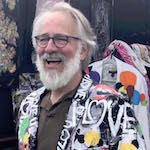
Irwin B. Goldstein, 1929-2012, R.I.P.

Last Friday night, at about 1:15 AM, my father, Irwin, suffered a major heart attack. My brother, Miles, had arrived for a visit with his wife and young daughter just a few hours earlier and was able to perform CPR till the paramedics came.

They were able to revive him and transport him to the hospital, but he was in a coma from that point on. 

Leslie and I were called at around 2:40 AM, washed up, threw a bag of clothes together, and drove all night, arriving at the hospital before 9 AM Saturday morning.

Once all the family was gathered at his bedside and had said our final goodbyes, ventilation and all support, other than a morphine drip for comfort, were removed at approximately 11:30 AM.
 
We were told that death would not come immediately. Maybe it would be a few minutes, maybe a few hours. As he hung on, that became "twelve hours, tops." Then, "by early Sunday morning." Despite all odds and expectations he held on another twenty-eight hours with family by his side. 
 
At 3:12 PM on Sunday, December 9, 2012, our father opened his eyes one last time and died looking into the eyes of our mother, his beloved Judi.
 
(What follows is a rough transcript of what I said Tuesday, in eulogy, at my father's funeral:)
 
In trying to decide what story to share with you all today, I wanted to share something that wasn't just personal, but a story that really explains who my father was; something to demonstrate his character. And what came to mind wasn't an early childhood memory, but something from just a couple of months ago.
 
As I'm sure you all know, Dad had been suffering from Alzheimer's for several years. Alzheimer's is heartless and relentless and was slowly taking him away from us.
 
It took away memories and details. It took away being able to have in-depth conversations and ask for advice. But it never took away the essence of who he was.
 
He was still overwhelmingly positive, happy, and loving life and his family. He was always pleased to see people he recognized and give a warm hello.
 
So the story:
 
The last time we went out to dinner was to a local place where my parents know the chef/owner and the chef's mother, Barbara, who is the hostess.
 
About a hundred times during the meal, Barbara would walk by our table to seat another group, and each time she'd pass, Dad would smile at her and say, "Hi! How are you doing?" to her like greeting a long lost friend. It was repetitive; but it was sincere. And she responded kindly each time because she knew he was sincere.
 
Some who only saw him at work might just say he was a good shmoozer, but he genuinely loved people, and everybody he met loved him.
 
At home he was still concerned for everybody else's comfort and happiness above his own, and making sure he was taking care of his family and any guests. "Can I get you something?" "Are you okay?" "Do you need anything?" ... Over and over again.
 
It's true, he wasn't the same as he was before Alzheimer's. But he was still Irwin. We may have already spent a couple of years mourning the decline, mourning the inevitable, and missing the details, but HE was still very much there, himself, with us, and taking care of us, till the very last.
 
... Okay... One personal childhood memory... One I don't even think my brothers know. A secret story...
 
Most of you know that Dad loved to play golf, and if you knew him long enough, that he played hockey as a kid. But we were not huge sports fans in our family. Still, when I was growing up, one of my favorite tv shows was ABCs Wide World of Sports.
 
I enjoyed Jim McCay, but more important was the ritual of how we watched it. Dad would lie down on the couch and I would lie down beside him, with his arm around me, enjoying the comforting aromas of Old Spice and Budweiser.
 
I have no idea where the rest of the family was on Saturday afternoons, but for me, "The thrill of victory and the agony of defeat" meant I would have ninety minutes alone with my Daddy.
 
Goodbye, Daddy. I love you.

Monday, December 03, 2012

Marginal Tax Rates 101

With all the current hysterical coverage of the impending "Fiscal Cliff" - or "Obama Tax Storm," depending on who you're listening to - and seeing what certain of my friends and associates are saying or posting online about it, it is unbearably clear that most Americans haven't the faintest idea of how marginal tax rates work.

It's not their fault. Politicians and the media have been talking down to us and "simplifying" the discussion for so long, that they'd have you believe things that simply are not true. For example, you may accept as "fact" that President Obama and Congressional Democrats want to raise the tax rate on those who earn more than $250,000 from 35% to 39.6%.

Using that statement and some basic arithmetic, you would assume that a family with $251,000 in income would see their taxes rise from $87,850 (35% of $251,000) to $99,396 (39.6% of $251,000) - a total tax increase of $11,546. You would also be wrong.

The statement "President Obama and Congressional Democrats want to raise the tax rate on those who earn more than $250,000 from 35% to 39.6%" contains three major "simplifications" that lead to these sloppy (and expensive) calcluations:
  1. Uses "earnings" (implying total gross salary) instead of "taxable income" (after all deductions, adjustments, and exemptions).
  2. Implies that you pay a single rate on all your earnings, instead of explaining how marginal rates apply.
  3. Uses a $250,000 figure that is two decades out of date. That figure for the 2012 tax year is actually $388,350.
Let's take these one at a time...

Earnings versus Taxable Income: Nobody, but Nobody, pays income tax on 100% of their income. Each version of the IRS form 1040, from the one-page EZ to the more complicated versions with dozens of attached schedules and sub-forms allows you to reduce the amount of income on which you owe taxes. Frankly, the more complicated a form you use, the more you are reducing your tax liability.

But even a single guy, just starting out, with no dependents, educational expenses, mortgage, or anything else to deduct, just using little old form 1040EZ, will take a standard deduction of $5,950 for 2012. That means, if he earns $30,000, he'll only pay taxes on $24,050. That tax will come out to $3,173, or about 10.5% of his gross income, or 13.2% of his taxable income, even though he's in the 15% tax bracket.

What's that? You don't get how somebody in the 15% tax bracket only pays 10.5% in taxes? Let's move on to that second "simplification" ...

Marginal Rates apply to earnings above the margin: When politicians talk about raising the rate on "incomes above $250,000" (really: taxable income above $388,350), they only mean the increment, or margin, above that figure. It doesn't change the taxes paid on the first "$250,000" you earn ($388,350 taxable).

To explain, we'll build a more complicated example than our single guy above. Let's assume a couple with a nice home, two kids, and combined total salary income of $450,000. They're going to file jointly, so they'll look at Tax Rate Schedule Y-1. Their taxes will be:
  • 10% on taxable income from $0 to $17,400, +
  • 15% on income over $17,400 to $70,700, +
  • 25% on income over $70,700 to $142,700, +
  • 28% on income over $142,700 to $217,450, +
  • 33% on income over $217,450 to $388,350, +
  • 35% on taxable income over $388,350.
But, before they figure out their taxes, they'll itemize their deductions to reduce their gross actual income and find their net taxable income:
  • Mortgage Interest: $16,500
  • Two Kids ($3,800 each): $7,600
  • Charitable Giving (1.5% of their income): $6,750
  • Business Expenses: $7,500
  • Miscellaneous: $3,500
  • Total Deductions: $41,850
(This is a real simple example with modest deductions - I didn't include any medical expenses, educational expenses, deposits to retirement accounts, etc. - These are just a few of the ways to reduce your tax liability.)

So, using Schedule Y-1 above, here's what their federal income taxes will break down to:
-->

 Earnings  Tax
Deductions  $41,850 $0
10%  $17,400  $1,740
15%  $53,300  $7,995
25%  $72,000  $18,000
28%  $74,750  $20,930
33%  $170,900  $56,397
35%  $19,800  $6,930
Totals:  $450,000  $111,992

Their bottom line is $111,992, or 24.9% of their total income of $450,000 ... even though they're in the top 35% bracket.

Using the media/political simplification of all things numerical, we would have thought they were paying $157,500 in taxes (35% of $450,000). We would also assume that the Democrats' proposal to let the top rate return to 39.6% would increase their taxes by $20,700 to $178,200 (39.6% of $450,000).

But, now that you know how real math works, you know that raising the top marginal rate on this well-to-do family will bring their total federal income tax burden to $112,903. An increase of only $911 (0.2% of their total income) - quite a bit less than the $20,700 certain politicians and journalists would suggest. Because, now you understand, the rate change from 35 to 39.6% only applies above the margin, to that last $19,800 of their taxable income.

So, where's  $250,000 in all this? When President Clinton's tax increases created the 39.6% rate twenty years ago, it was for taxable income over that figure. And, because politicians and journalists are lazy, they've just continued referring to that number ever since (if you don't like "lazy" please come up with a better explanation that doesn't include "lie"). But the cut-off point for each of the tax brackets actually adjusts each year for inflation.

By 2003, when the Bush tax cuts were going into effect, "$250,000" was $311,950, but we kept saying "$250,000" out of habit. During the 2010 "Fiscal Cliff" discussions, "$250,000" was $373,650. Today, it's $388,350. Is that really so hard for reporters and politicians to understand? Never mind...

But aren't we Taxed Enough Already? The Tea Partiers are both wrong and right on this. Regarding federal income tax rates they are completely wrong. Current federal income tax rates are at their lowest point in over 60 years. And, yes, because the base line for each marginal rate has gone up at least as fast as inflation (why $250,000 is now $388,350), that means this year's tax burden is less than last year's.

But, in part because federal income taxes have been held at historically low levels for a decade, other taxes and fees have gone up. States, not getting as much as they used to from the feds, may have increased their income, property, or sales taxes, as well as made cuts. Counties and cities, not getting what they used to from the states, may have raised local sales taxes or passed "special assessments" added on to property tax bills, and/or made cuts in services. Across the board, fees for everything from parking to getting married etc., may have increased to make up for shortfalls from another area.

Because sales taxes, use fees, etc., are not progressive, like the federal income tax (multi-tiered, the rich pay a higher rate), the burden of these taxes falls more on lower and middle income earners. So, depending on where you live, what you earn, and a few other factors, you may indeed feel as if you're paying more in taxes over-all, even with a smaller annual bill from the IRS.

Bottom Line: You probably know where I stand on this. I don't believe it's asking too much of a family that earns nearly half-a-million dollars annually to kick in another grand in taxes when the country faces a fiscal crisis. To insist on holding even this top rate down will only result in more cuts in services and/or increased taxes and fees elsewhere down the line.

But regardless of whether or not you agree with me on the politics, can we all at least agree to use real numbers and real math?

For more fun with tax brackets, this page on moneychimp.com has an easy, interactive tax calculator that allows you to see how all of this works and check your tax rates across time and space.

Monday, November 12, 2012

A Few Election Stats

One more post-election wrap-up here, now that Florida is officially in the blue column. This gives the President re-election with 332 electoral votes to Romney's 206. The popular vote also went to the President with 62.1 million votes (51%) to Romney's 58.8 million (48%), a 3.4 million vote advantage.

I'd say this is a clear mandate, but is this a landslide? Let's look at how the Republican pundits described what they would consider a "landslide" before the election:
  • George Will predicts "321-217 Romney landslide"
  • Glenn Beck, "landslide for Romney, electoral college 300+ R"
  • Michael Barone predicts "Romney trounces Obama in electoral college 315-223"
  • Larry Kudlow "predicting a 330 vote electoral landslide" (for Romney)
  • And let's not even get started on Karl Rove...
So, clearly the Republican pundits agree that 332 electoral college votes is a "landslide" - but I'll stick with clear mandate. Or was it?

When all the dust is settled, there will still be 40% of eligible voters (about 78 million) who chose not to participate last Tuesday. And, that figure includes about 13 million voters who participated in 2008, but couldn't be bothered with it again only four years later. More analysis will need to be done to determine how much of that drop-off in voting was due to voters displaced by Hurricane Sandy, and how much due to apathy, but I'm betting on apathy to beat Sandy in a landslide.

You know from my last post that I have some ideas for fighting voter apathy. I'll have some more to say about that later. But for now, here's an interesting info-graphic about who did (and didn't) vote this year (also shows how much more effective the Obama campaign was at using social media).

Thursday, November 08, 2012

The Democracy Pledge

Tuesday evening's election result was a great success for the future of our country. No, I'm not talking about the re-election of President Barack Obama (although I am quite happy about that). No, I'm today I'm talking about the election of Angus S. King, Jr. as the new U.S. Senator from the great state of Maine. King will join Bernie Sanders of neighboring Vermont as one half of the Independent population of the U.S. Senate. As King, the former two-term independent Governor of Maine, said on his website:
... Angus promised Maine people that the only consideration he would take when casting his vote would be the interests of Maine and the country, not a political party's agenda. In electing [him] ... voters rejected the bitter partisanship that has brought our political process to a standstill, and embraced a new Independent direction. 
Yes, despite my campaigning for Barack Obama's re-election, I am still an independent at heart and by registration. One of my core beliefs is that our country is at its best when the largest number of citizens possible participate in our democracy. As a left-of-center independent, I thoroughly reject the false dichotomy that all Americans can be put into two neat divisions of Republicans or Democrats. I also view the negative influence of big money on elections as one of the main reasons for voter apathy.

Put together, those beliefs make a simple formula:
More Choices - Corrupt Money = Higher Voter Turnout and a Working Democracy
So, in order to achieve this, I propose a "Democracy Pledge." Candidates of all parties ("major" and "third") are encouraged to take the Pledge by promising to champion at least three of the following reforms. Voters are encouraged to support those candidates who have taken the Pledge, and to promote the Democracy Pledge concept.

The Democracy Pledge Platform consists of the following:
  1. Repeal Citizens United; Pass a Constitutional amendment stating that only people are people, not corporations! - (See Move to Amend)
  2. Reign in Super PACs; Make candidates responsible for message and spending of independent groups acting on their behalf. Limit contributions to both candidates and PACs at all levels.
  3. End the Electoral College; The Electoral College was a compromise to balance the power of slave states and free states. We need to either end or vastly reform the electoral system to put more emphasis on the popular vote.
  4. IRV (Instant Run-Off Voting) or Preference Voting; Makes every vote count and allows for more points-of-view in the electoral process.
  5. Early Voting in All States; A minimum of two weeks, including at least one full weekend.
  6. Change Election Day; Tuesday made sense in the 1840s, but now it is an inconvenience for the majority of working Americans. Either move election day to a weekend, or make Election Day a holiday.
  7. No Straight Ballot Voting; Require voters to choose a candidate in each race, rather than pull a "straight ballot" lever.
  8. Fair Debates; Change the Bi-Partisan Commission on Presidential Debates to a Non-Partisan Commission. Any party or candidate that has achieved ballot status in enough states to reach 270 electoral votes must be included. Encourage those states where debates take place between statewide office holders (i.e.: Governor or Senator) to enact similar open debate provisions. - (See Open Debates)
  9. Voter ID; Identification requirements that are onerous or require any expenditure on the part of the voter are an impediment to participation and potentially un-Constitutional. Any ID requirements that are enacted must be minimal, sensitive to the concerns of all, and with any financial burden falling upon the state making such a requirement.
It is not my point here to promote any one candidate or any one third party or ideology; it is to promote democracy. It is also not my point to automatically oppose major party candidates. To get any reforms passed will require allies across the spectrum who believe in democracy and participation. If we can get any number of these reforms enacted, we can broaden political discussion, minimize the influence of money, and increase voter participation.
"In reality, there is no such thing as not voting: you either vote by voting, or you vote by staying home and tacitly doubling the value of some diehard's vote." - David Foster Wallace

"Some men change their party for the sake of their principles; others their principles for the sake of their party." - Winston Churchill

"Democracy is not something you believe in or a place to hang your hat, but it's something you do. You participate. If you stop doing it, democracy crumbles." - Abbie Hoffman

"Just say 'No' to the two party system." - Me

Friday, October 26, 2012

California 30-38

No, "California 30-38" is not a sports score, and, no, it's not a highway designation. 30 and 38 are competing propositions in the November 6 election, and Californians are in such agreement about the problem they each seek to address, that we're going to send them each down to defeat. But let me explain what they are first, and then tell you why we're probably screwed.

Here's the basic problem: Our state is broke. Our June 2012 budget gap was about $16.6 billion. The budget deal worked out between Governor Brown and the legislature balanced the budget with about $8.1 billion in spending cuts, $2.5 billion in "transfers," and the last $6 billion in new taxes "pending voter approval."

Prop 30 was placed on the ballot by the Governor as part of that budget deal. The $6 billion hole is filled by increasing the tax on incomes over $250,000 (or $500,000 for couples filing jointly) for a period of seven years, and a 1/4 cent per $1 increase in sales tax for four years. The funds go into an "Education Protection Account" within the state General Fund. Because it's within the General Fund, it increases the Prop 98 guarantees to education (K-12, plus Community Colleges), but also frees up some existing funds for other purposes.

The Prop 30 taxes go into effect immediately to cover the $6 billion gap in the current year's budget. If it fails, the budget deal included "trigger cuts." We will have a balanced budget this year, no matter what. Those $6 billion in automatic cuts include $5.3 billion from public schools for the current school year. Ever wondered what would happen if thousands of teachers got laid off in the middle of the school year? Or if your local school district defaulted on its bond payments? You might just find out if Prop 30 fails to pass.

Prop 38 is an alternative tax plan, not negotiated by the legislature, but put on the ballot by Molly Munger, who has spent about $33 million of her own money to pass it.  (Coincidentally, Molly's brother, Charles Munger Jr., has spent about $22 million of his own to lead the fight against Prop 30). Prop 38 raises income taxes on just about everybody (incomes over $7,000) for twelve years, but leaves sales tax alone. The money goes into an "Education Trust Fund," but this one is outside of the General Fund, so it is in addition to the Prop 98 guaranteed funding from the (diminished) General Fund. Prop 38 does not include Community College funding, but does include early childhood education.

Prop 38 could be an interesting alternative to the Governor's plan, except for one fatal flaw: It takes effect next year, leaving the "trigger cuts" in place for this year. Prop 38 might help in the future, but the chaos the trigger cuts would cause in education this year would do incredible harm to 100% of public school students in the state this generation. But I will vote for it anyway.

Yes, I will vote for 38, AND I will vote for 30. The proponents of each have campaigned as though we have to make a choice, and can only vote for one or the other. That is not true. And this is why I say we are doomed.

California law provides for a way to reconcile two propositions passing which each address the same issue: The one with the most votes prevails. Yes, if you vote for 30 & 38, and they both pass, you don't get two tax increases, you only get the one with the most support.

Prop 30 was headed for victory, until the Mungers, Molly and Charles, put over $55 million of their fortunes into ads against 30 and for 38. Now support for 30 has dipped to 46% approval. Meanwhile, Prop 38 only has 39% of voter approval in current polling. Now, it's been a while since I was in school, but in the old days 46+39 equaled 85% in favor of one or the other. Even if we assume there's some overlap in support, there's clearly a majority in favor of some tax increase.

Despite the fact that the majority of Californians agree that we need to enact one or the other tax increase to save our schools, and our state's competitive edge, both propositions will fail because we're being presented with the election as a "choose one only" option. The majority are for saving the state, but those who would rather destroy California than pay one cent more in taxes win by dividing and conquering the majority. Which, the conspiracy-minded might wonder, may have been what the Mungers had in mind all along.

If you're a Californian voter, I hope that you'll join me in voting for both propositions, 30 & 38, and may the better solution prevail.

Here's my quickie ballot guide to the rest of the California initiatives:


30 - taxes/budget Yes
31 - budget reform No
32 - special exemptions No
33 - auto Insurance undecided
34 - end death penalty Yes
35 - human trafficking Yes
36 - 3 strikes reform Yes
37 - GMO labeling Yes
38 - tax rates Yes
39 - business tax Yes
40 - redistricting Yes

Sunday, October 21, 2012

George McGovern: Acts of Faith

"Politics is an act of faith; you have to show some kind of confidence in the intellectual and moral capacity of the public."
"No man should advocate a course in private that he's ashamed to admit in public."
"The highest patriotism is not a blind acceptance of official policy, but a love of one's country deep enough to call her to a higher plain."
"For many years, I wanted to run for the presidency in the worst possible way - and last year, I sure did."
"I'm fed up to the ears with old men dreaming up wars for young men to die in."
George McGovern, July 19, 1922-October 21, 2012
Early this morning, former Senator George McGovern died in hospice in Sioux Falls, SD. He was 90 years old and surrounded by friends and family.

McGovern was a proud liberal till the very end. A man who had "learned to hate war by waging it" as a decorated World War II bomber pilot, he was the Democratic Party's nominee to challenge President Nixon's re-election in 1972.

While I had been somewhat aware of the players in the 1968 Presidential election, and as a kid in Massachusetts, certainly was caught up in the tragedy of of Bobby Kennedy's assassination, it was the election of 1972 - and its aftermath - that first truly sucked me into the life of a political junkie. At the age of eleven I walked our precinct with my mother getting word out about McGovern, and on election day we stood outside the polling place (in the snow) with our last-ditch effort electioneering.

Of course, the result was that Nixon was re-elected in a landslide, carrying 49 states, and ceding to McGovern only the District of Columbia and Massachusetts. I was both devastated and fascinated by the results and began collecting souvenirs of the trouncing: bumper stickers bearing the slogans "Massachusetts the One and Only" and "Nixon 49/America 1," a pin that simply read "OS4MY" (for, "Oh Shit, Four More Years!"), and other memorabilia that I only wish I could still find.

Of course, even before the election was over, there was some question of dirty tricks involving Nixon's team doing something over at the Democratic Headquarters located in the Watergate Hotel and office complex. I followed the Watergate hearings closely. As for many others of my generation, this was hugely formative in how I would see politics and government for the rest of my life.

By the middle of 1974 both Nixon, and his VP, Spiro Agnew, had resigned in disgrace, and I had moved to California. I would eventually earn a BA in Politics and a Master of Public Policy and Administration. My career would allow me to have meetings with legislators at all levels of government. I would volunteer on a few more Presidential campaigns. But the inspiration and dedication of that first candidate, George McGovern, and the lessons of 1972-1974 have never been far behind.

My thoughts go out to the McGovern family and all those who knew this great man and hero to the left. I only hope that before he passed, he sent in his absentee ballot.
 
The blogger in 1972; the t-shirt says, "Vote."
Read more at:
The McGovern Center
George McGovern @ Wikipedia

Tuesday, October 16, 2012

Republican Tax Policy Explained and Debunked

Sometime last years I promised that I would write about blog about the Laffer Curve, and how it has determined Republican tax policy for the past 30 years, from Reagan to Romney. Well, it's a little late, and it's in a video rather than a written blog, but here it is.

Sit back and learn about Dr. Arthur Laffer and the little doodle he made on the back of a napkin that ended up changing U.S. economic policy for a generation, and why a vote for Mitt Romney is yet another vote for the Laffer Curve.

Twitter Feed