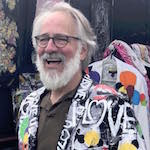
A couple of months ago I told you all about one of my oldest friends, JD Chandler, publishing his book, Murder & Mayhem in Portland, Oregon. Well, now another old friend, Rich Samuels, has gone and put out a new book of his own, My Life at the Bottom of the Food Chain.
I'll be honest with you, Food Chain is not a book I would have picked up if it were not from an old friend. It is aimed at the "Young Adult" market, meaning teenaged kids, and it's been quite a long time since I fit that demographic. Still, I promised Rich I'd read it, so I did, and I loved it. But this is not the book review. My official review is over at Goodreads.
No, this is my blog, so it's for personal reflections. And reading a book about awkward teenaged boys written by somebody you knew years ago when you were each awkward teenage boys can stir up some memories.
Not that any of us needed to be quite so paranoid of bullies as Alexander is (the kid in the book), but still, there were some quite relatable scenes.
At one point in the book, Alexander and his friends meet at a favorite place to share massive orders of French fries. It brought back when Rich, JD, Crazy Tom, and I were taking a Super-8 film production class at the nearby University one night per week while we were still in High School. Following the class, we'd always stop at In-n-Out Burger and split a couple of orders of fries while discussing what we'd learned, and what we'd film that coming weekend.
When JD, Crazy Tom, and I started the class, and the fries tradition, we'd each take turns buying the fries. Once Rich joined the group, it seemed like it was always his turn to pay (I blame Crazy Tom for coming up with this idea). Rich never complained. A year or two ago, I finally confessed my pent-up guilt over this French fry scam to Rich. He claimed to have never noticed.
Reading Rich's book, many scenes like this came back in view. I wish somebody would have given me a book like this when I was an awkward teenager going to Junior High in a new town, trying to make some friends while navigating around the dangers. Maybe I would have learned something, been a little more comfortable within myself, and had a better time of things. Instead of just trying to scam free French fries off of nice guys like Rich.
Anyway, you can read my review of My Life at the Bottom of the Food Chain at Goodreads, or just head over to Amazon and order the darn thing already.
Sunday, June 09, 2013
Wednesday, May 29, 2013
The little guy with the bandage on his head ...
The little guy with the bandage on his head is my oldest nephew, Andrew. The occasion was our wedding, and Andrew was the ring bearer.
The night before the wedding we had a rehearsal dinner at a rather nice restaurant with all our out-of-town guests in attendance. It was quite a party. Andrew was hanging out by the bar with his little brother, Keith, and 2nd cousin, Julian, although they all swore they weren't drinking.
A little playing around got a little out of hand, and a bar stool came toppling down onto little Andrew. Lots of blood, sirens, paramedics, and a trip to the emergency room followed.
The next morning, as we were getting set for the wedding ceremony to begin, we all sat down with Andrew and said, "It's okay. You had a rough night last night. If you don't want to carry the rings Uncle Steve will take them for you."
"No, this is important for you, Uncle Ken and Aunt Leslie. I want to do it."
It's now 17 years later. He still has a scar on his forehead. And he's getting married this Saturday.
We live in California, his wedding is in Connecticut. Because of work obligations we cannot make a real vacation of going east for the wedding. Instead, we will leave Friday morning, travel all day, and arrive at the airport in Connecticut about 1/2-an-hour before his rehearsal dinner, but we will make it. The wedding is Saturday, then we'll fly home Sunday and be back at work Monday morning.
It's a crazy trip to make: crossing country for a single day's activities. Too much travel time, too expensive, not enough time to visit with people back east. Ridiculous!
But Andrew got a life-long scar for our wedding. This is the least we could do in return, after all, it is important for him.
(This story is cross-posted to Cowbird)
The night before the wedding we had a rehearsal dinner at a rather nice restaurant with all our out-of-town guests in attendance. It was quite a party. Andrew was hanging out by the bar with his little brother, Keith, and 2nd cousin, Julian, although they all swore they weren't drinking.
A little playing around got a little out of hand, and a bar stool came toppling down onto little Andrew. Lots of blood, sirens, paramedics, and a trip to the emergency room followed.
The next morning, as we were getting set for the wedding ceremony to begin, we all sat down with Andrew and said, "It's okay. You had a rough night last night. If you don't want to carry the rings Uncle Steve will take them for you."
"No, this is important for you, Uncle Ken and Aunt Leslie. I want to do it."
It's now 17 years later. He still has a scar on his forehead. And he's getting married this Saturday.
We live in California, his wedding is in Connecticut. Because of work obligations we cannot make a real vacation of going east for the wedding. Instead, we will leave Friday morning, travel all day, and arrive at the airport in Connecticut about 1/2-an-hour before his rehearsal dinner, but we will make it. The wedding is Saturday, then we'll fly home Sunday and be back at work Monday morning.
It's a crazy trip to make: crossing country for a single day's activities. Too much travel time, too expensive, not enough time to visit with people back east. Ridiculous!
But Andrew got a life-long scar for our wedding. This is the least we could do in return, after all, it is important for him.
(This story is cross-posted to Cowbird)
Monday, April 15, 2013
I Am A Bostonian
I am a Bostonian. I don't mean that just in a general "today we're all Bostonians" way - not "Ich bin ein Bostonian" - but in a born there, in my blood, key to who I am way.
No matter how long I live elsewhere, no matter how Californian I may also be, no matter if I never step foot on Massachusetts soil again, I will always be a Bostonian.
Growing up, going to watch the Boston marathon was an annual tradition. We had our usual spot, along "heartbreak hill," where the marathon wound its way up Commonwealth Ave through Newton.
Those memories come flooding back today with news of a probable terrorist attack killing at least two and injuring dozens more at the marathon's finish line.
There is now only speculation as to who and why this happened. I have my own theories, based on my own ideas of what the greatest threats are to America today. But I'll keep them to myself until actual facts are available.
Right now, all I have to say is, "I am a Bostonian." Hopefully we all are.
No matter how long I live elsewhere, no matter how Californian I may also be, no matter if I never step foot on Massachusetts soil again, I will always be a Bostonian.
Growing up, going to watch the Boston marathon was an annual tradition. We had our usual spot, along "heartbreak hill," where the marathon wound its way up Commonwealth Ave through Newton.
Those memories come flooding back today with news of a probable terrorist attack killing at least two and injuring dozens more at the marathon's finish line.
There is now only speculation as to who and why this happened. I have my own theories, based on my own ideas of what the greatest threats are to America today. But I'll keep them to myself until actual facts are available.
Right now, all I have to say is, "I am a Bostonian." Hopefully we all are.
Wednesday, April 03, 2013
Ear Worms & Guilty Pleasures
It started a couple of weeks ago - March 21st to be exact - with the Guilty Pleasures episode of Glee. Yes, I sometimes watch Glee, and I suppose that is a bit of a guilty pleasure, but this post is not about Glee. I watch it, I admit it, get over it.
Anyway, the theme of the episode was that each kid would perform a song from an artist they were embarrassed to enjoy; their guilty pleasure. Blaine (Darren Criss)'s choice was to perform Phil Collins' Against All Odds. It was a decent cover, and the rare live performance rather than lip-synched production number. And, I had to agree with young Blaine, it's about time to get over being sick of how overplayed Phil Collins became, he still wrote some damn good songs and deserves our respect.
Yes, he created a lot of meaningless pop songs that all blended together into one horn-infused mess after a while. But he also maintained Genesis following the departure of Peter Gabriel, and while it wasn't the same, they made records worthy of the Genesis name (Mama and Home by the Sea from 1983's self-titled Genesis LP immediately spring to mind). Beyond the silly pop songs, his solo hits also included the undeniably classic In the Air Tonight.
Listening to Blaine sing Against All Odds, I tried to remember if I appreciated how great a song it was at the time. It may have been just after the saturation point had been reached and Phil was no longer cool. And, as a movie theme, I may not have taken the song as seriously as I should have. But, really, I don't fully remember.
What I do recall is a time about a year or two before, on December 19, 1982, when Phil embarked on his first solo tour of the USA, and I attended the show at Perkins Palace in Pasadena. His first solo LP, Face Value, had done well (featuring In The Air Tonight), and his second LP, Hello, I Must Be Going!, had just been released a few weeks earlier. I was working at the Music Plus record store on Vine Street, in Hollywood, and got the tickets only hours before the show from the Atlantic Records rep.
Two specific things I remember about that show. First, was standing in line before the show directly behind Tony Dow. Second was the excitement at the opening drum beat of I Don't Care Anymore. It was a great show that was captured on video and for radio broadcast on the King Biscuit Flower Hour.
So, anyway, yes, watching Glee a couple of weeks ago, I had to admit that, yes, Phil rocks, and that Against All Odds was, and still is, a brilliant song. But then, the next morning, I had it stuck in my head. Checking my email in the morning, "How can I just let you walk away, just let you leave without a trace?" Standing in the shower, "Oh, so take a look at me now-ow..."
And it continued the next day, and the next, and the next. It was 1985 all over - I'd been Phil Collinized again! Yesterday I thought it was finally gone, but it's back this morning.
This has to be one of the longest-lasting ear worms I've ever experienced. And that's the thing about Phil Collins' songs; they are infectious. The good ones along with the bad ones. Whether you like them or not, you cannot get them out of your head. "And there's nothing left here to remind me, just the memory of your face," and the endless loop of this song in my brain.
I'm just thankful now that Blaine did not choose Sussudio.
Anyway, the theme of the episode was that each kid would perform a song from an artist they were embarrassed to enjoy; their guilty pleasure. Blaine (Darren Criss)'s choice was to perform Phil Collins' Against All Odds. It was a decent cover, and the rare live performance rather than lip-synched production number. And, I had to agree with young Blaine, it's about time to get over being sick of how overplayed Phil Collins became, he still wrote some damn good songs and deserves our respect.
Yes, he created a lot of meaningless pop songs that all blended together into one horn-infused mess after a while. But he also maintained Genesis following the departure of Peter Gabriel, and while it wasn't the same, they made records worthy of the Genesis name (Mama and Home by the Sea from 1983's self-titled Genesis LP immediately spring to mind). Beyond the silly pop songs, his solo hits also included the undeniably classic In the Air Tonight.
Listening to Blaine sing Against All Odds, I tried to remember if I appreciated how great a song it was at the time. It may have been just after the saturation point had been reached and Phil was no longer cool. And, as a movie theme, I may not have taken the song as seriously as I should have. But, really, I don't fully remember.
What I do recall is a time about a year or two before, on December 19, 1982, when Phil embarked on his first solo tour of the USA, and I attended the show at Perkins Palace in Pasadena. His first solo LP, Face Value, had done well (featuring In The Air Tonight), and his second LP, Hello, I Must Be Going!, had just been released a few weeks earlier. I was working at the Music Plus record store on Vine Street, in Hollywood, and got the tickets only hours before the show from the Atlantic Records rep.
Two specific things I remember about that show. First, was standing in line before the show directly behind Tony Dow. Second was the excitement at the opening drum beat of I Don't Care Anymore. It was a great show that was captured on video and for radio broadcast on the King Biscuit Flower Hour.
So, anyway, yes, watching Glee a couple of weeks ago, I had to admit that, yes, Phil rocks, and that Against All Odds was, and still is, a brilliant song. But then, the next morning, I had it stuck in my head. Checking my email in the morning, "How can I just let you walk away, just let you leave without a trace?" Standing in the shower, "Oh, so take a look at me now-ow..."
And it continued the next day, and the next, and the next. It was 1985 all over - I'd been Phil Collinized again! Yesterday I thought it was finally gone, but it's back this morning.
This has to be one of the longest-lasting ear worms I've ever experienced. And that's the thing about Phil Collins' songs; they are infectious. The good ones along with the bad ones. Whether you like them or not, you cannot get them out of your head. "And there's nothing left here to remind me, just the memory of your face," and the endless loop of this song in my brain.
I'm just thankful now that Blaine did not choose Sussudio.
Friday, March 29, 2013
Murder and Mayhem in Portland
One of my oldest and best friends, JD Chandler, has just published his latest book, Murder & Mayhem in Portland, Oregon (History Press 2013), a true crime history book chronicling 100 years of local murders. His theory is that one can learn about a region's social, political, and cultural history by making a study of its murders, and after reading the book, I believe he's right.
You can read my full review over on GoodReads, but on this blog I just wanted to put in a more personal plug. I've known JD since about 1974 or '75, and we were creative partners back in our Super-8 movie-making days.
Someday I'll get around to converting some of those to digital, but for now you'll have to settle for our most recent collaboration, a video I shot with JD in the summer of 2011 when he took Leslie and I around some of the sites of Portland's more grizzly murders (though not the same ones detailed in the new book):
Anyway, if you're interested in old west history, murder, political corruption, perversion, or Portland, you may want to check out Murder & Mayhem in Portland, Oregon.
You can read my full review over on GoodReads, but on this blog I just wanted to put in a more personal plug. I've known JD since about 1974 or '75, and we were creative partners back in our Super-8 movie-making days.
Someday I'll get around to converting some of those to digital, but for now you'll have to settle for our most recent collaboration, a video I shot with JD in the summer of 2011 when he took Leslie and I around some of the sites of Portland's more grizzly murders (though not the same ones detailed in the new book):
Anyway, if you're interested in old west history, murder, political corruption, perversion, or Portland, you may want to check out Murder & Mayhem in Portland, Oregon.
Thursday, December 13, 2012
Irwin B. Goldstein, 1929-2012, R.I.P.
Last Friday night, at about 1:15 AM, my father, Irwin, suffered a major heart attack. My brother, Miles, had arrived for a visit with his wife and young daughter just a few hours
earlier and was able to perform CPR till the paramedics came.
They were able to revive him and transport him to the hospital, but he was in a coma from that point on.
Leslie and I were called at around 2:40 AM, washed up, threw a bag of clothes together, and drove all night, arriving at the hospital before 9 AM Saturday morning.
Once all the family was gathered at his bedside and had said our final goodbyes, ventilation and all support, other than a morphine drip for comfort, were removed at approximately 11:30 AM.
They were able to revive him and transport him to the hospital, but he was in a coma from that point on.
Leslie and I were called at around 2:40 AM, washed up, threw a bag of clothes together, and drove all night, arriving at the hospital before 9 AM Saturday morning.
Once all the family was gathered at his bedside and had said our final goodbyes, ventilation and all support, other than a morphine drip for comfort, were removed at approximately 11:30 AM.
We were told that death would not come immediately. Maybe it would be a few minutes, maybe a few hours. As he hung on, that became "twelve hours, tops." Then, "by early Sunday morning." Despite all odds and expectations he held on another twenty-eight hours with family by his side.
At 3:12 PM on Sunday, December 9, 2012, our father opened his eyes one last time and died looking into the eyes of our mother, his beloved Judi.
(What follows is a rough transcript of what I said Tuesday, in eulogy, at my father's funeral:)
In trying to decide what story to share with you all today, I wanted to share something that wasn't just personal, but a story that really explains who my father was; something to demonstrate his character. And what came to mind wasn't an early childhood memory, but something from just a couple of months ago.
As I'm sure you all know, Dad had been suffering from Alzheimer's for several years. Alzheimer's is heartless and relentless and was slowly taking him away from us.
It took away memories and details. It took away being able to have in-depth conversations and ask for advice. But it never took away the essence of who he was.
He was still overwhelmingly positive, happy, and loving life and his family. He was always pleased to see people he recognized and give a warm hello.
So the story:
The last time we went out to dinner was to a local place where my parents know the chef/owner and the chef's mother, Barbara, who is the hostess.
About a hundred times during the meal, Barbara would walk by our table to seat another group, and each time she'd pass, Dad would smile at her and say, "Hi! How are you doing?" to her like greeting a long lost friend. It was repetitive; but it was sincere. And she responded kindly each time because she knew he was sincere.
Some who only saw him at work might just say he was a good shmoozer, but he genuinely loved people, and everybody he met loved him.
At home he was still concerned for everybody else's comfort and happiness above his own, and making sure he was taking care of his family and any guests. "Can I get you something?" "Are you okay?" "Do you need anything?" ... Over and over again.
It's true, he wasn't the same as he was before Alzheimer's. But he was still Irwin. We may have already spent a couple of years mourning the decline, mourning the inevitable, and missing the details, but HE was still very much there, himself, with us, and taking care of us, till the very last.
... Okay... One personal childhood memory... One I don't even think my brothers know. A secret story...
Most of you know that Dad loved to play golf, and if you knew him long enough, that he played hockey as a kid. But we were not huge sports fans in our family. Still, when I was growing up, one of my favorite tv shows was ABCs Wide World of Sports.
I enjoyed Jim McCay, but more important was the ritual of how we watched it. Dad would lie down on the couch and I would lie down beside him, with his arm around me, enjoying the comforting aromas of Old Spice and Budweiser.
I have no idea where the rest of the family was on Saturday afternoons, but for me, "The thrill of victory and the agony of defeat" meant I would have ninety minutes alone with my Daddy.
Goodbye, Daddy. I love you.
Monday, December 03, 2012
Marginal Tax Rates 101
With all the current hysterical coverage of the impending "Fiscal Cliff" - or "Obama Tax Storm," depending on who you're listening to - and seeing what certain of my friends and associates are saying or posting online about it, it is unbearably clear that most Americans haven't the faintest idea of how marginal tax rates work.
It's not their fault. Politicians and the media have been talking down to us and "simplifying" the discussion for so long, that they'd have you believe things that simply are not true. For example, you may accept as "fact" that President Obama and Congressional Democrats want to raise the tax rate on those who earn more than $250,000 from 35% to 39.6%.
Using that statement and some basic arithmetic, you would assume that a family with $251,000 in income would see their taxes rise from $87,850 (35% of $251,000) to $99,396 (39.6% of $251,000) - a total tax increase of $11,546. You would also be wrong.
The statement "President Obama and Congressional Democrats want to raise the tax rate on those who earn more than $250,000 from 35% to 39.6%" contains three major "simplifications" that lead to these sloppy (and expensive) calcluations:
Earnings versus Taxable Income: Nobody, but Nobody, pays income tax on 100% of their income. Each version of the IRS form 1040, from the one-page EZ to the more complicated versions with dozens of attached schedules and sub-forms allows you to reduce the amount of income on which you owe taxes. Frankly, the more complicated a form you use, the more you are reducing your tax liability.
But even a single guy, just starting out, with no dependents, educational expenses, mortgage, or anything else to deduct, just using little old form 1040EZ, will take a standard deduction of $5,950 for 2012. That means, if he earns $30,000, he'll only pay taxes on $24,050. That tax will come out to $3,173, or about 10.5% of his gross income, or 13.2% of his taxable income, even though he's in the 15% tax bracket.
What's that? You don't get how somebody in the 15% tax bracket only pays 10.5% in taxes? Let's move on to that second "simplification" ...
Marginal Rates apply to earnings above the margin: When politicians talk about raising the rate on "incomes above $250,000" (really: taxable income above $388,350), they only mean the increment, or margin, above that figure. It doesn't change the taxes paid on the first "$250,000" you earn ($388,350 taxable).
To explain, we'll build a more complicated example than our single guy above. Let's assume a couple with a nice home, two kids, and combined total salary income of $450,000. They're going to file jointly, so they'll look at Tax Rate Schedule Y-1. Their taxes will be:
So, using Schedule Y-1 above, here's what their federal income taxes will break down to:
-->
Their bottom line is $111,992, or 24.9% of their total income of $450,000 ... even though they're in the top 35% bracket.
Using the media/political simplification of all things numerical, we would have thought they were paying $157,500 in taxes (35% of $450,000). We would also assume that the Democrats' proposal to let the top rate return to 39.6% would increase their taxes by $20,700 to $178,200 (39.6% of $450,000).
But, now that you know how real math works, you know that raising the top marginal rate on this well-to-do family will bring their total federal income tax burden to $112,903. An increase of only $911 (0.2% of their total income) - quite a bit less than the $20,700 certain politicians and journalists would suggest. Because, now you understand, the rate change from 35 to 39.6% only applies above the margin, to that last $19,800 of their taxable income.
So, where's $250,000 in all this? When President Clinton's tax increases created the 39.6% rate twenty years ago, it was for taxable income over that figure. And, because politicians and journalists are lazy, they've just continued referring to that number ever since (if you don't like "lazy" please come up with a better explanation that doesn't include "lie"). But the cut-off point for each of the tax brackets actually adjusts each year for inflation.
By 2003, when the Bush tax cuts were going into effect, "$250,000" was $311,950, but we kept saying "$250,000" out of habit. During the 2010 "Fiscal Cliff" discussions, "$250,000" was $373,650. Today, it's $388,350. Is that really so hard for reporters and politicians to understand? Never mind...
But aren't we Taxed Enough Already? The Tea Partiers are both wrong and right on this. Regarding federal income tax rates they are completely wrong. Current federal income tax rates are at their lowest point in over 60 years. And, yes, because the base line for each marginal rate has gone up at least as fast as inflation (why $250,000 is now $388,350), that means this year's tax burden is less than last year's.
But, in part because federal income taxes have been held at historically low levels for a decade, other taxes and fees have gone up. States, not getting as much as they used to from the feds, may have increased their income, property, or sales taxes, as well as made cuts. Counties and cities, not getting what they used to from the states, may have raised local sales taxes or passed "special assessments" added on to property tax bills, and/or made cuts in services. Across the board, fees for everything from parking to getting married etc., may have increased to make up for shortfalls from another area.
Because sales taxes, use fees, etc., are not progressive, like the federal income tax (multi-tiered, the rich pay a higher rate), the burden of these taxes falls more on lower and middle income earners. So, depending on where you live, what you earn, and a few other factors, you may indeed feel as if you're paying more in taxes over-all, even with a smaller annual bill from the IRS.
Bottom Line: You probably know where I stand on this. I don't believe it's asking too much of a family that earns nearly half-a-million dollars annually to kick in another grand in taxes when the country faces a fiscal crisis. To insist on holding even this top rate down will only result in more cuts in services and/or increased taxes and fees elsewhere down the line.
But regardless of whether or not you agree with me on the politics, can we all at least agree to use real numbers and real math?
For more fun with tax brackets, this page on moneychimp.com has an easy, interactive tax calculator that allows you to see how all of this works and check your tax rates across time and space.
It's not their fault. Politicians and the media have been talking down to us and "simplifying" the discussion for so long, that they'd have you believe things that simply are not true. For example, you may accept as "fact" that President Obama and Congressional Democrats want to raise the tax rate on those who earn more than $250,000 from 35% to 39.6%.
Using that statement and some basic arithmetic, you would assume that a family with $251,000 in income would see their taxes rise from $87,850 (35% of $251,000) to $99,396 (39.6% of $251,000) - a total tax increase of $11,546. You would also be wrong.
The statement "President Obama and Congressional Democrats want to raise the tax rate on those who earn more than $250,000 from 35% to 39.6%" contains three major "simplifications" that lead to these sloppy (and expensive) calcluations:
- Uses "earnings" (implying total gross salary) instead of "taxable income" (after all deductions, adjustments, and exemptions).
- Implies that you pay a single rate on all your earnings, instead of explaining how marginal rates apply.
- Uses a $250,000 figure that is two decades out of date. That figure for the 2012 tax year is actually $388,350.
Earnings versus Taxable Income: Nobody, but Nobody, pays income tax on 100% of their income. Each version of the IRS form 1040, from the one-page EZ to the more complicated versions with dozens of attached schedules and sub-forms allows you to reduce the amount of income on which you owe taxes. Frankly, the more complicated a form you use, the more you are reducing your tax liability.
But even a single guy, just starting out, with no dependents, educational expenses, mortgage, or anything else to deduct, just using little old form 1040EZ, will take a standard deduction of $5,950 for 2012. That means, if he earns $30,000, he'll only pay taxes on $24,050. That tax will come out to $3,173, or about 10.5% of his gross income, or 13.2% of his taxable income, even though he's in the 15% tax bracket.
What's that? You don't get how somebody in the 15% tax bracket only pays 10.5% in taxes? Let's move on to that second "simplification" ...
Marginal Rates apply to earnings above the margin: When politicians talk about raising the rate on "incomes above $250,000" (really: taxable income above $388,350), they only mean the increment, or margin, above that figure. It doesn't change the taxes paid on the first "$250,000" you earn ($388,350 taxable).
To explain, we'll build a more complicated example than our single guy above. Let's assume a couple with a nice home, two kids, and combined total salary income of $450,000. They're going to file jointly, so they'll look at Tax Rate Schedule Y-1. Their taxes will be:
- 10% on taxable income from $0 to $17,400, +
- 15% on income over $17,400 to $70,700, +
- 25% on income over $70,700 to $142,700, +
- 28% on income over $142,700 to $217,450, +
- 33% on income over $217,450 to $388,350, +
- 35% on taxable income over $388,350.
- Mortgage Interest: $16,500
- Two Kids ($3,800 each): $7,600
- Charitable Giving (1.5% of their income): $6,750
- Business Expenses: $7,500
- Miscellaneous: $3,500
- Total Deductions: $41,850
So, using Schedule Y-1 above, here's what their federal income taxes will break down to:
-->
| Earnings | Tax | |
| Deductions | $41,850 | $0 |
| 10% | $17,400 | $1,740 |
| 15% | $53,300 | $7,995 |
| 25% | $72,000 | $18,000 |
| 28% | $74,750 | $20,930 |
| 33% | $170,900 | $56,397 |
| 35% | $19,800 | $6,930 |
| Totals: | $450,000 | $111,992 |
Their bottom line is $111,992, or 24.9% of their total income of $450,000 ... even though they're in the top 35% bracket.
Using the media/political simplification of all things numerical, we would have thought they were paying $157,500 in taxes (35% of $450,000). We would also assume that the Democrats' proposal to let the top rate return to 39.6% would increase their taxes by $20,700 to $178,200 (39.6% of $450,000).
But, now that you know how real math works, you know that raising the top marginal rate on this well-to-do family will bring their total federal income tax burden to $112,903. An increase of only $911 (0.2% of their total income) - quite a bit less than the $20,700 certain politicians and journalists would suggest. Because, now you understand, the rate change from 35 to 39.6% only applies above the margin, to that last $19,800 of their taxable income.
So, where's $250,000 in all this? When President Clinton's tax increases created the 39.6% rate twenty years ago, it was for taxable income over that figure. And, because politicians and journalists are lazy, they've just continued referring to that number ever since (if you don't like "lazy" please come up with a better explanation that doesn't include "lie"). But the cut-off point for each of the tax brackets actually adjusts each year for inflation.
By 2003, when the Bush tax cuts were going into effect, "$250,000" was $311,950, but we kept saying "$250,000" out of habit. During the 2010 "Fiscal Cliff" discussions, "$250,000" was $373,650. Today, it's $388,350. Is that really so hard for reporters and politicians to understand? Never mind...
But aren't we Taxed Enough Already? The Tea Partiers are both wrong and right on this. Regarding federal income tax rates they are completely wrong. Current federal income tax rates are at their lowest point in over 60 years. And, yes, because the base line for each marginal rate has gone up at least as fast as inflation (why $250,000 is now $388,350), that means this year's tax burden is less than last year's.
But, in part because federal income taxes have been held at historically low levels for a decade, other taxes and fees have gone up. States, not getting as much as they used to from the feds, may have increased their income, property, or sales taxes, as well as made cuts. Counties and cities, not getting what they used to from the states, may have raised local sales taxes or passed "special assessments" added on to property tax bills, and/or made cuts in services. Across the board, fees for everything from parking to getting married etc., may have increased to make up for shortfalls from another area.
Because sales taxes, use fees, etc., are not progressive, like the federal income tax (multi-tiered, the rich pay a higher rate), the burden of these taxes falls more on lower and middle income earners. So, depending on where you live, what you earn, and a few other factors, you may indeed feel as if you're paying more in taxes over-all, even with a smaller annual bill from the IRS.
Bottom Line: You probably know where I stand on this. I don't believe it's asking too much of a family that earns nearly half-a-million dollars annually to kick in another grand in taxes when the country faces a fiscal crisis. To insist on holding even this top rate down will only result in more cuts in services and/or increased taxes and fees elsewhere down the line.
But regardless of whether or not you agree with me on the politics, can we all at least agree to use real numbers and real math?
For more fun with tax brackets, this page on moneychimp.com has an easy, interactive tax calculator that allows you to see how all of this works and check your tax rates across time and space.
Subscribe to:
Posts (Atom)